

Background
An International Space Station (ISS) stakeholder came to us with a problem: many of his engineers, who ranged from undergrad students to veteran NASA power users, were having trouble answering a reasonable question – “When I open this website each day, how do I know what I should be doing next?”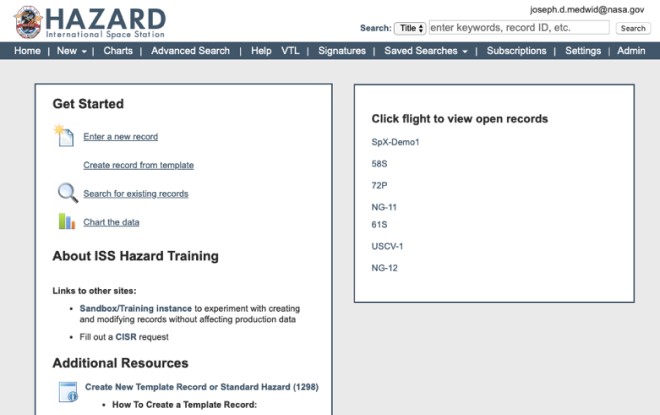
The original page contained limited useful data
Process
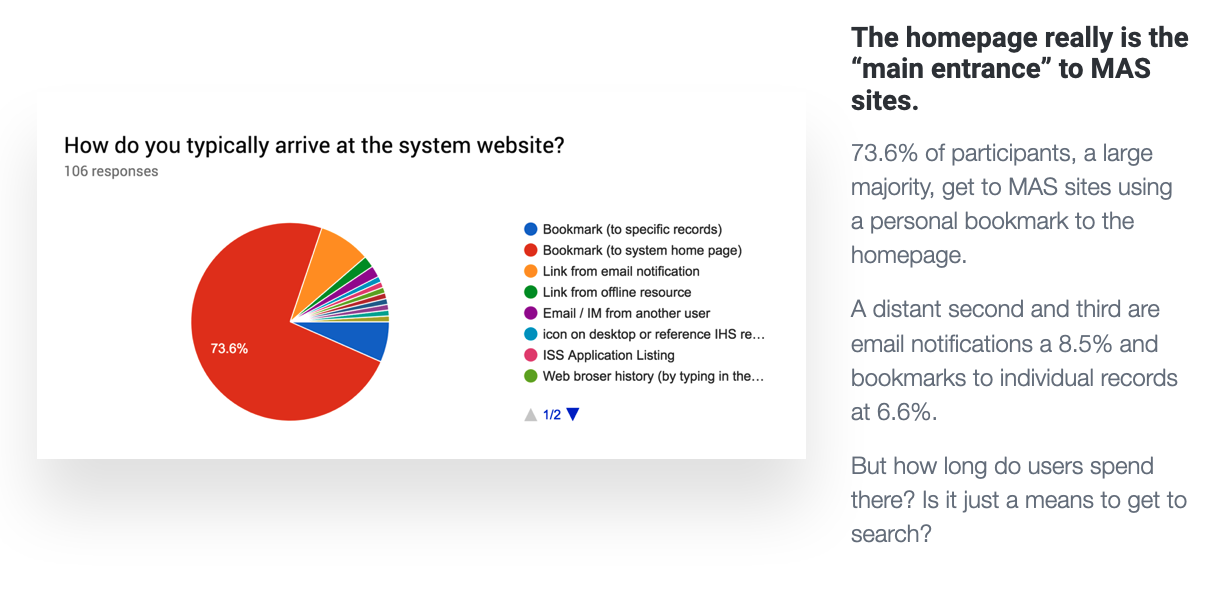
I began research by conducting a survey of 100+ users across all MAS applications. After receiving the results, I compared this qualitative feedback with user analytics to see when or if the sources told different stories. This work provided a treasure trove of insights that would form the basis of our intervention, including…- 74% of users reported arriving at their application via the homepage
- Very few users reported using tutorials, data charts, and other features currently taking up the majority of the space on the homepage
- Most users are conducting searches or manually entering record IDs to achieve their primary goal, identified as “finding records for which I have a task.”
 We knew that the ability to personalize would be key to this initiative’s success. To foster a sense of ownership in our ISS stakeholders, we conducted in-person card sorting co-design activities that prompted participants to make the homepage of their dreams. We finished research with semi-structured interviews of 45+ users across multiple domains and experience levels, focusing on how to create an experience relevant to such a diverse cohort.
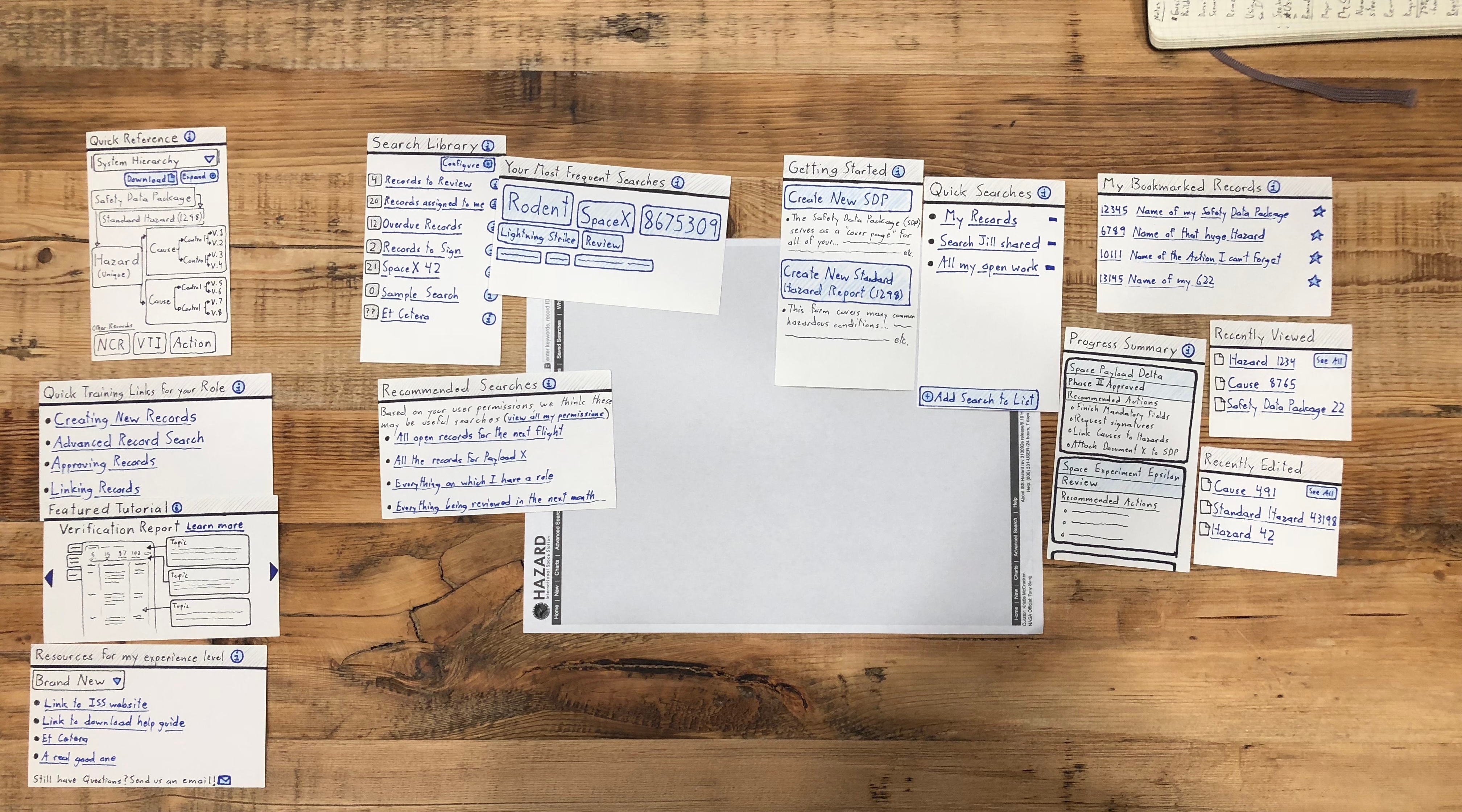
Paper prototyping allowed users to clearly communicate which proposed capabilities they valued, and where they could be displayed
Results
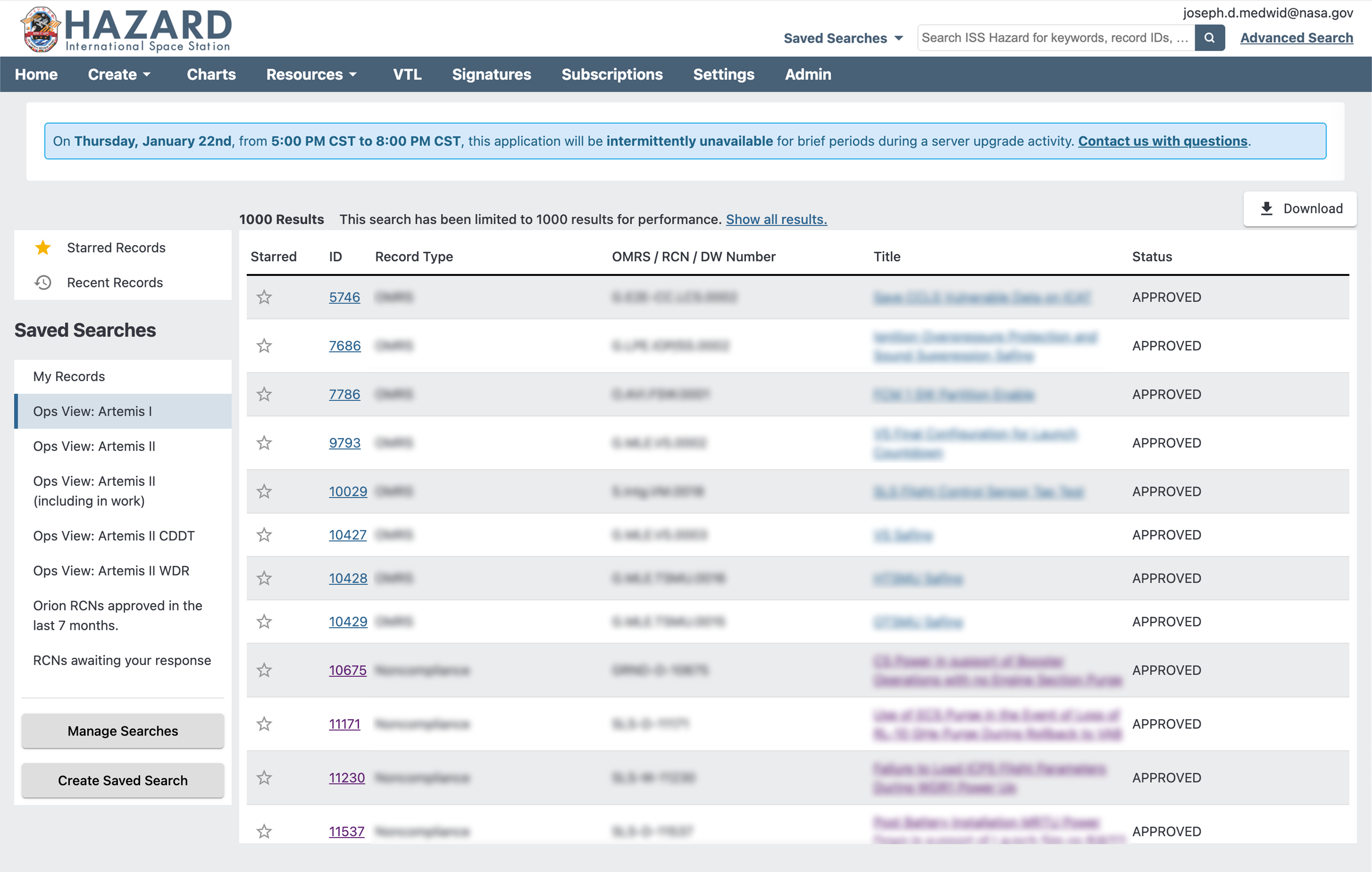
After synthesizing key research insights and running many design concepts by our developers to keep scope in check, we landed on a design that would expand the existing “saved search” infrastructure utilized by all applications. This would minimize the need for novel development while leveraging features that users were already familiar with, and be highly customizable both across and within applications. When users navigate to a homepage, they’re greeted with the results of a default search. This ensures that some relevant content is always shown to users, even if it’s their first time visiting the site. This default search is configurable, allowing power users to create custom-tailored views. To support this capability, we introduced a powerful new “Manage Searches” interface making it simpler to organize and share searches.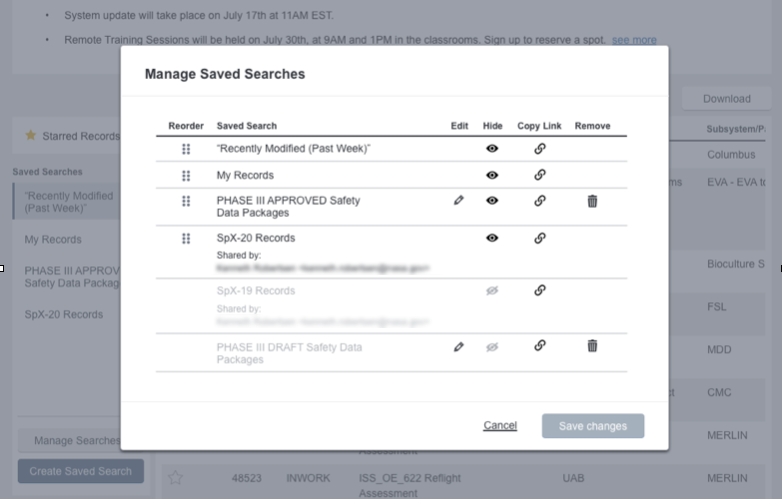
A combined interface for reordering, managing, and sharing searches
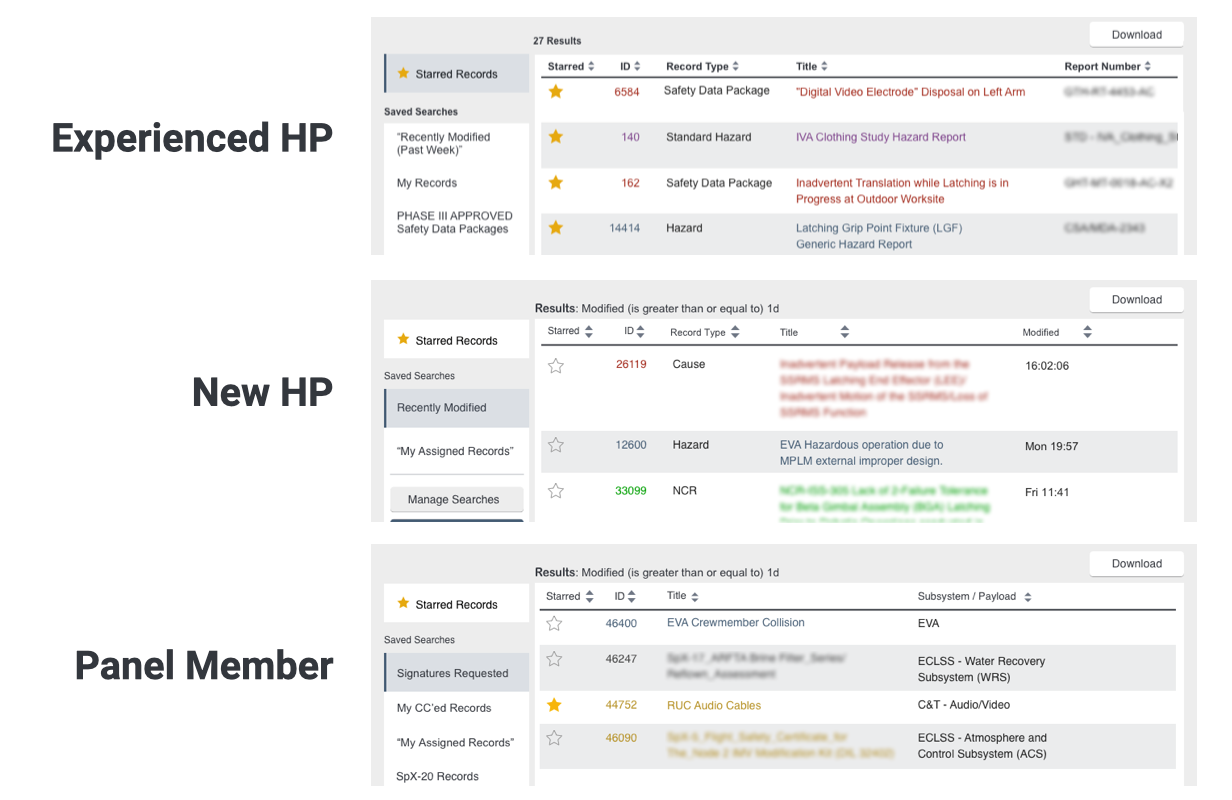
Power users are inclined to specify particular records, while less-frequent users need more assistance via pre-populated defaults
Product Roadmap
Since the new homepage was deployed, Starring has become an unexpected standout feature, with high utilization in use cases ranging from tracking daily to-do’s to reporting to management. In later updates, other designers on the team built upon the interactions we established, creating similar indicators for Recent records and unsigned Signatures. The ability to Manage searches and share results also proved to be remarkably successful, with the simple but powerful capability to share searches via a URL being especially impactful.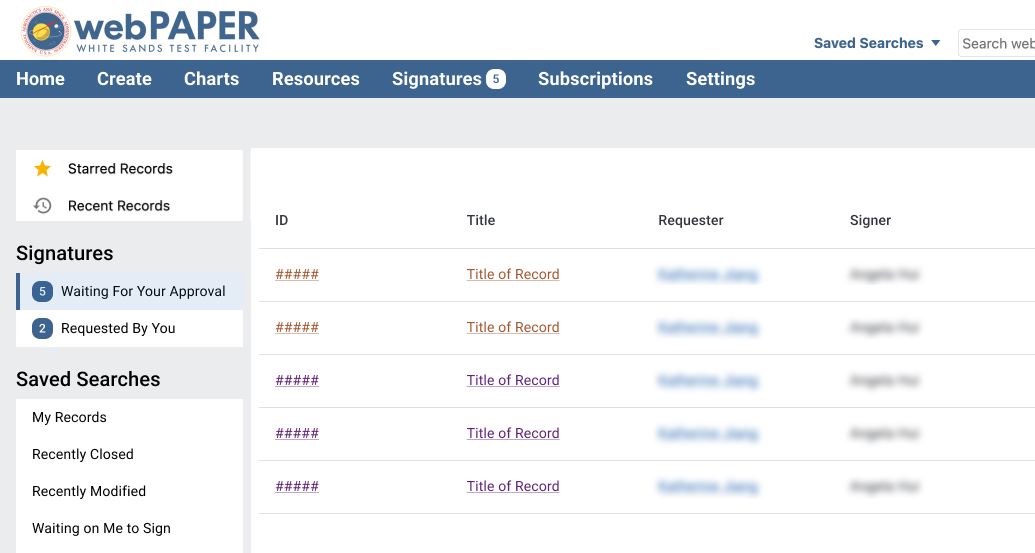
An updated Homepage showing Recent records and Signature requests