

Cross-Program Search // Federated search tool
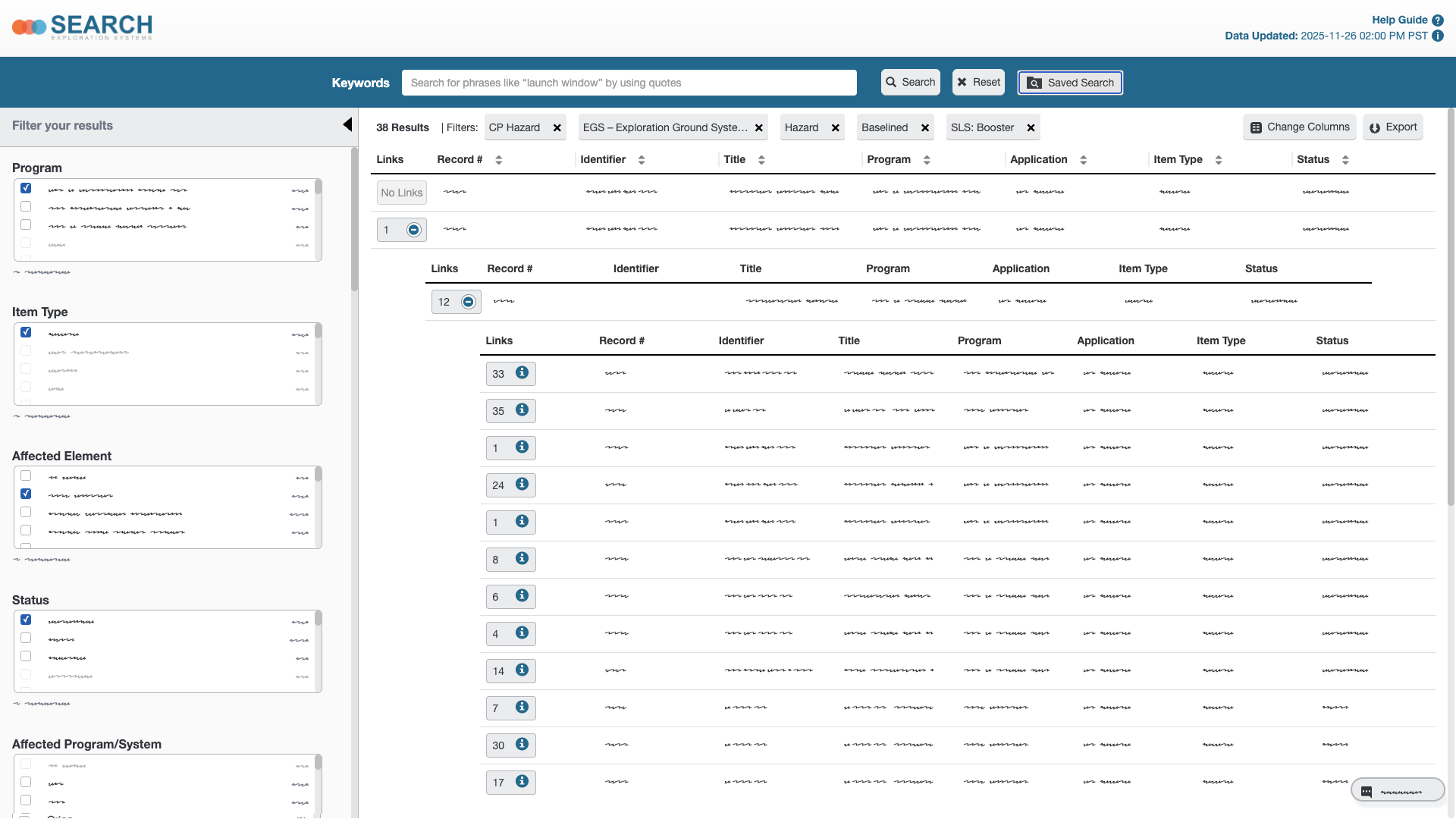
I led interface design and product strategy for a new tool allowing NASA engineers to search 380,000+ records across 11 applications in seconds during critical mission phases when the right data matters most.
Background
As our NASA Data Integration team succeeded in transferring processes from “digital paper” (PDFs, Excel workbooks, etc.) to structured databases, we sought to leverage views of those vast datasets in the NASA enterprise. Users in interdisciplinary roles especially had trouble finding what they needed when venturing into less familiar domains. Our team conducted extensive research across multiple user communities, eventually deciding to pursue a federated search tool that would integrate our most-used data.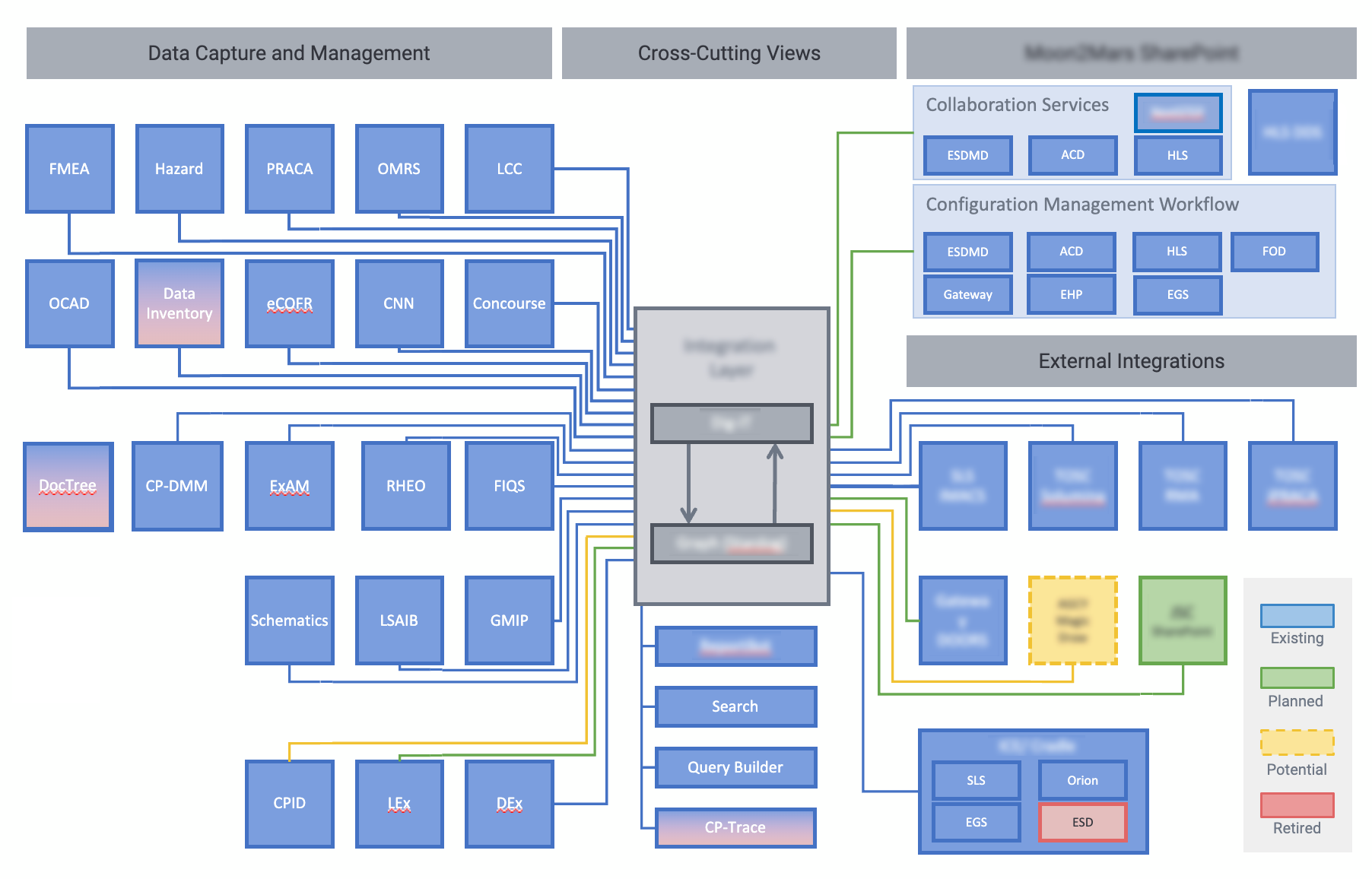
The “Octopus Chart,” showing the web of interconnected data managed by our team
Process
While those initial investigations pointed towards the shape of a product, the details needed to be guided by targeted user research. We conducted research and concept validation with users whose roles had them most directly interfacing with multiple datasets, gathering insights on their pain points and use cases. Participants included both strategic users involved in years-long planning processes and extremely tactical users training to use our data during launch countdowns. It became clear that two interactions would prove to be most important – the initial search, where users apply broad criteria to hone in on the information they’ll need, and a subsequent step of quick refinement to go from a few dozen results to a handful of the most likely items. We performed extensive information architecture investigations to arrive at a set of common filters that would combine similar data types across our applications, and worked closely with developers to determine salience algorithms so that the best results would feature most prominently.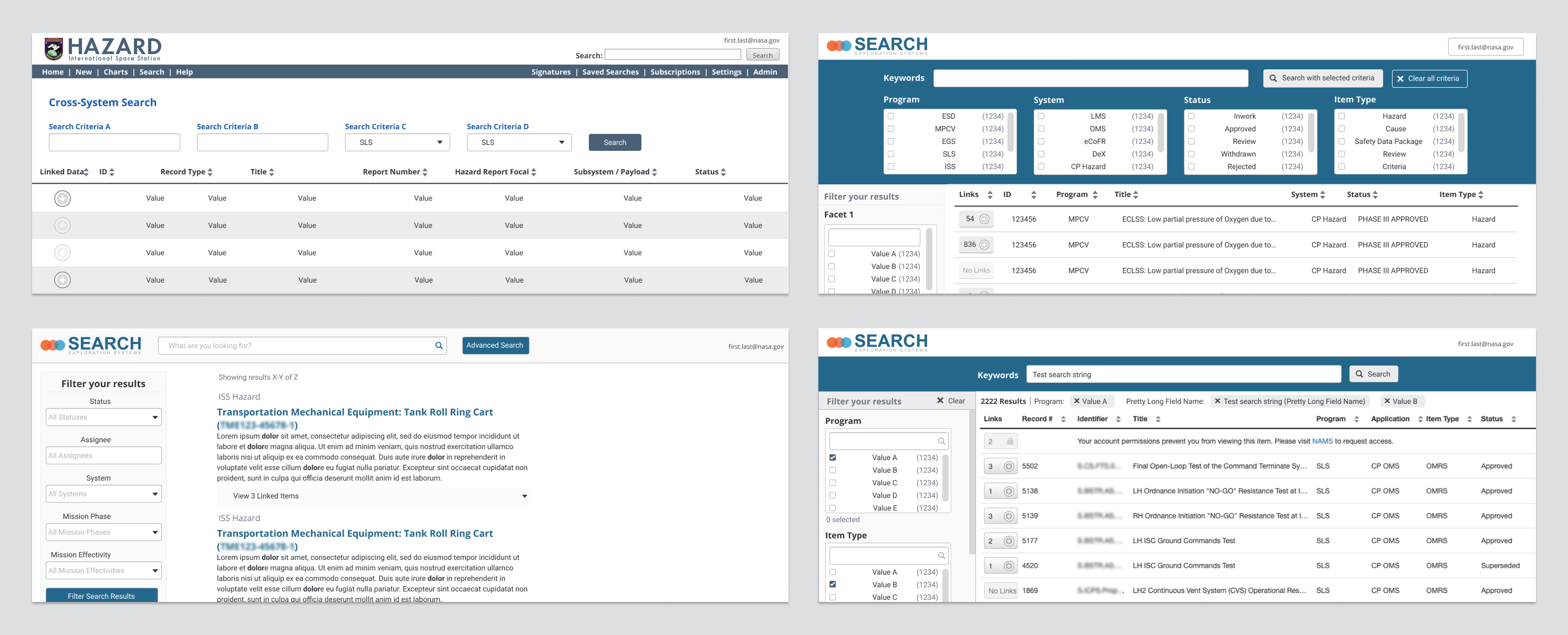
Several iterations on the initial filtering step
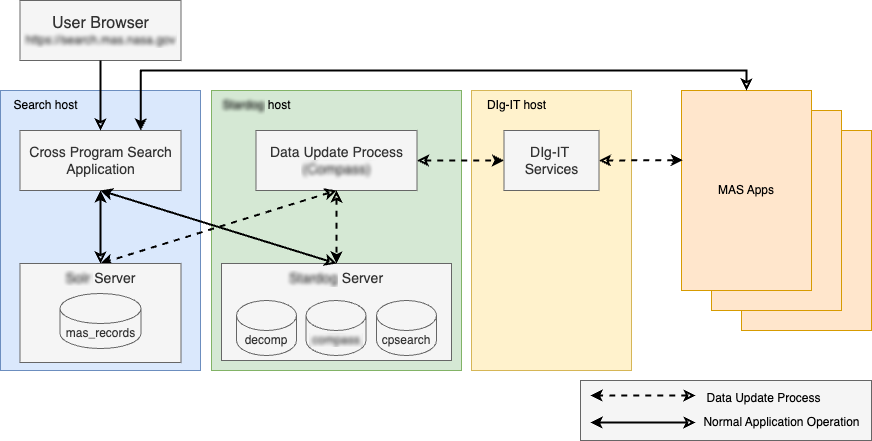
Devs were key collaborators, as most usability decisions were impacted by the tech stack
Results
Cross-Program (CP) Search was conceived as a minimally-intrusive guide to get users where they needed to go, fast. To achieve this, we implemented approaches that would:- Offer users minimal up-front filtering to get them to their desired data quicker, then provide the ability to dive deeper when or if needed
- Display the minimum data needed to quickly determine if a record was applicable before jumping into the full details
- Clearly display related data, and make accessing it quick and simple
- Ensure easy access to the tool without requiring unique login credentials – security settings carry through from authoritative sources into CP Search

Considering all states of the widget indicating linked records
Product Roadmap
CP Search continues to be updated based on user feedback and insights gleaned from a robust metrics dashboard. Data sets relevant to the most common queries are regularly incorporated, and features like saved searches and configurable columns were added to provide users a customized experience with quicker access to their important data.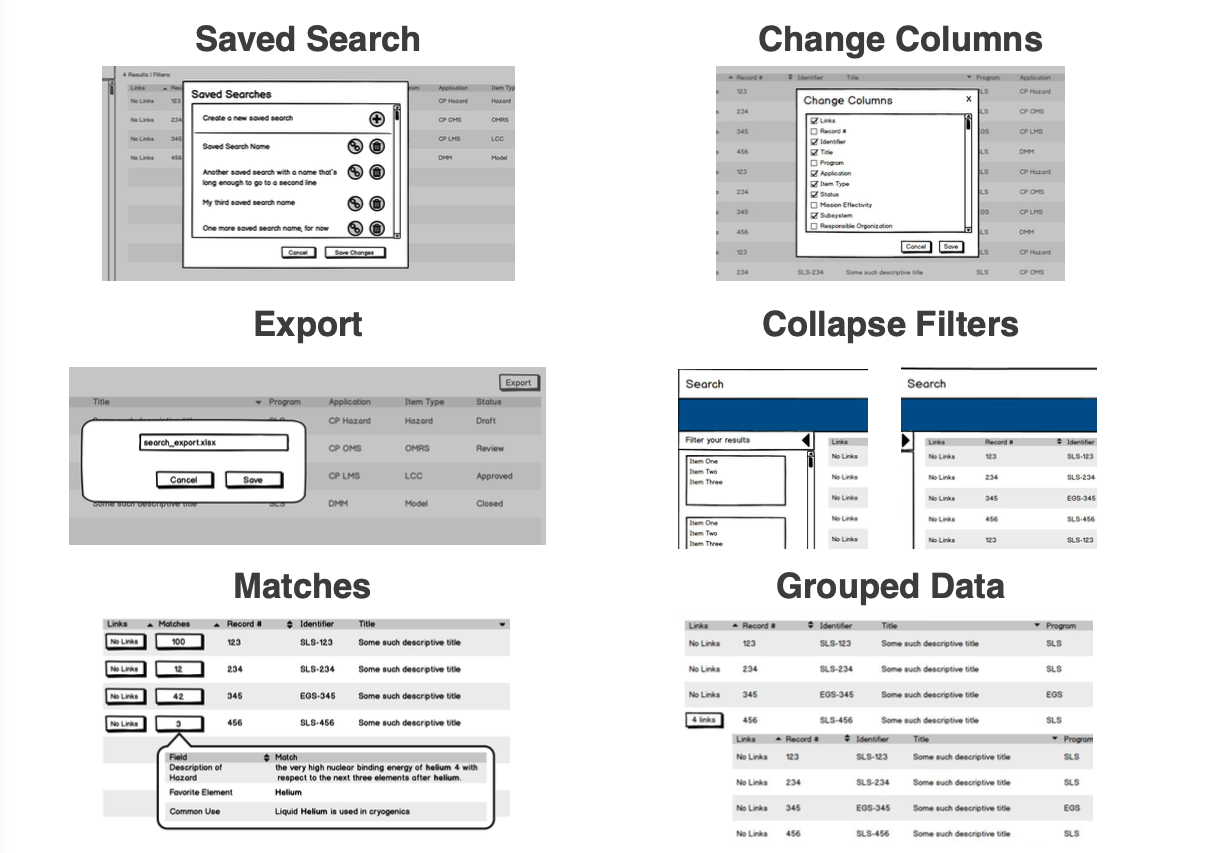
A handful of low-fidelity designs considered as part of the CP Search roadmap
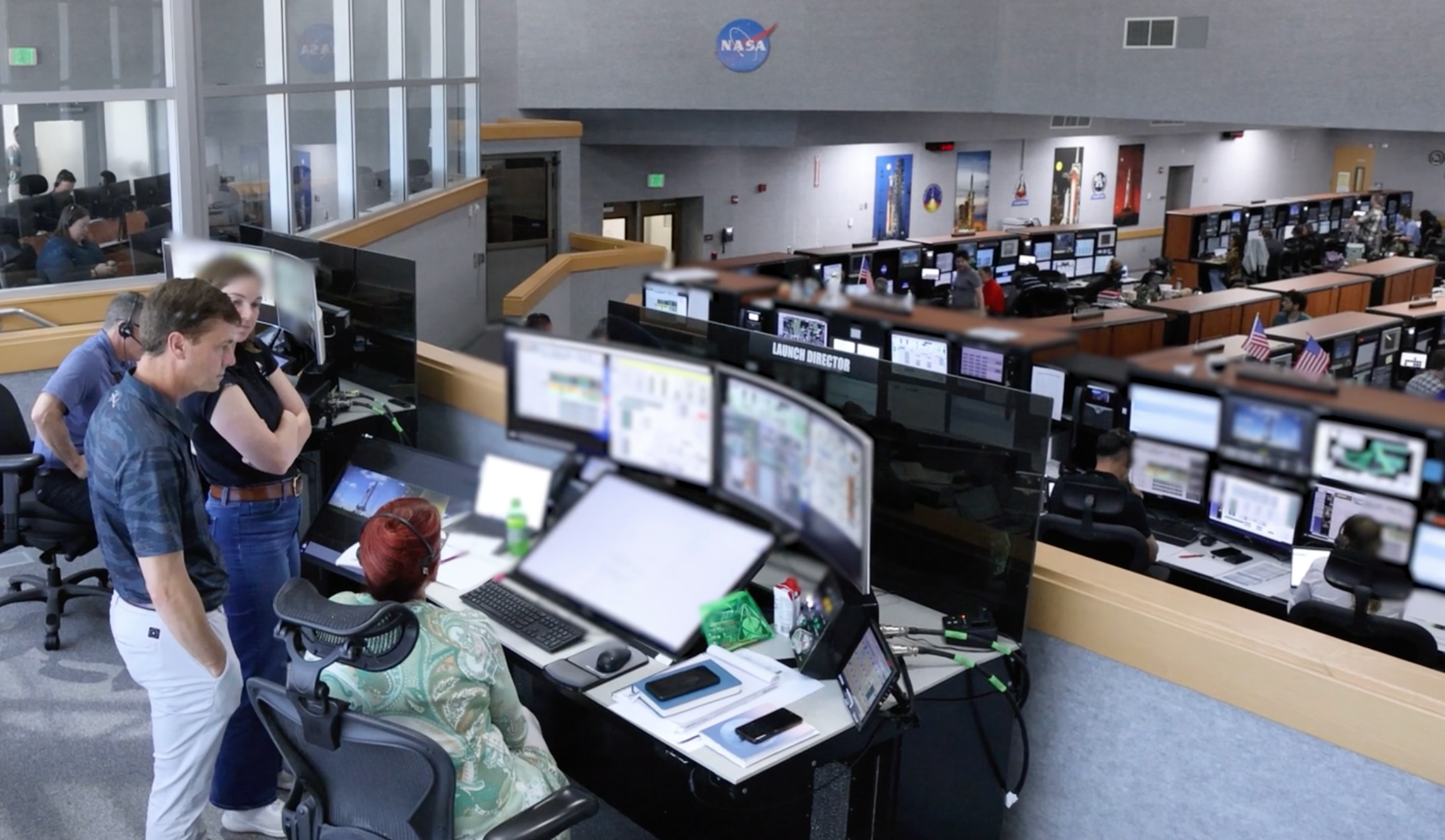
The Artemis firing room, where CP Search has been used during missions and simulations